how is shampoo manufactured
News 2026-07-08
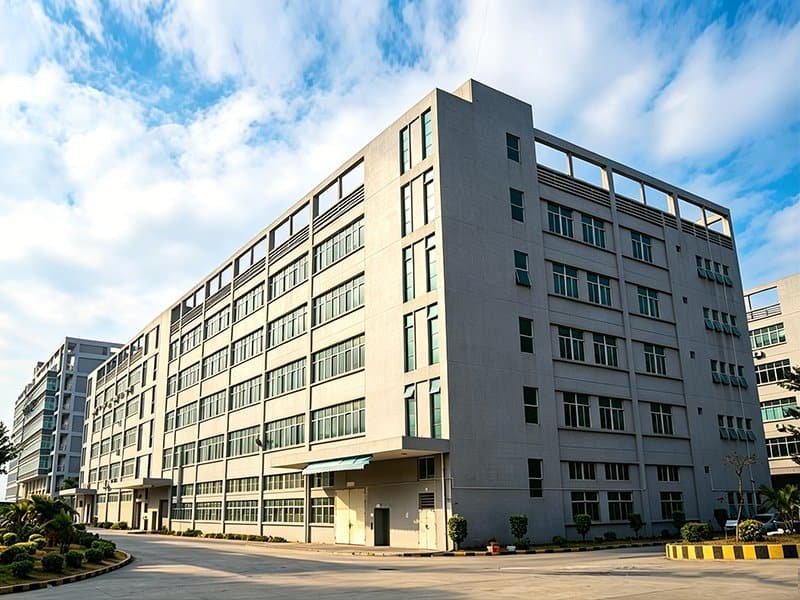
Many people wonder how shampoo is made. A high-quality, safe, and consistent shampoo is not simply a mixture of raw materials. Instead, it is produced in strict compliance with GMPC/ISO 22716 personal care manufacturing standards, undergoing multiple precise processes—including raw material selection, purified water preparation, emulsification, temperature-controlled blending, antimicrobial treatment and cooling, fragrance adjustment and quality inspection, and filling and packaging. The entire production process takes place in a dust-free, sterile environment with standardized temperature control, ultimately resulting in a gentle, cleansing, and consistently effective finished product.
Below, we’ll fully reveal how shampoo is made, providing a comprehensive overview of the standardized production process for shampoo at a cosmetics factory.
I. Raw Material Inspection and Precise Formulation (Core Pre-Production Step)
To understand how shampoo is made, we must start with raw material control at the source. The first step in production is strict raw material control to ensure product safety and quality from the very beginning. The factory first conducts sampling tests on all raw materials to verify their purity, activity, pH level, and safety, preventing substandard, expired, or non-compliant materials from entering the production line.
Once the materials pass inspection, technicians precisely weigh and measure the ingredients according to the product formula, categorizing and storing high-temperature-resistant ingredients separately from low-temperature active ingredients. High-temperature-resistant base ingredients are used for high-temperature emulsification and blending, while heat-sensitive ingredients—such as vitamins, plant extracts, fragrances, and active conditioning agents—are stored separately and added during the low-temperature stage to maximize the retention of their activity and prevent degradation due to high heat.
II. Purified Water Filtration and Preparation (Foundation of Product Stability)
Professional hair care production imposes extremely high standards on water quality, which is one of the key details in shampoo manufacturing. The use of ordinary tap water is strictly prohibited in shampoo production, as impurities, heavy metals, and bacteria in the water can cause product spoilage, separation, bacterial growth, and scalp irritation.
The factory uniformly employs multi-stage reverse osmosis deionization systems. Through multiple purification steps—including filtration, softening, deionization, and sterilization—minerals, impurities, and microorganisms are removed from the water, producing high-purity, sterile water. This serves as the base solvent for shampoo, ensuring the finished product has a light, transparent texture, a stable formulation, long-term resistance to separation, and a gentle, non-irritating formula.
III. High-Temperature Emulsification and Blending (Key Process for Base Formulation)
Sterile purified water is injected into a food-grade stainless steel emulsification and mixing vessel. The constant-temperature heating system is activated to raise the temperature to 85–90°C, after which heat-resistant ingredients—including primary surfactants, conditioning agents, moisturizing bases, and thickening stabilizers—are added sequentially.
Throughout the process, closed-loop stirring at a constant speed is combined with high-speed homogenization and emulsification. The high-temperature environment allows macromolecular ingredients to fully dissolve and blend, completely eliminating particles and clumps, while simultaneously achieving physical high-temperature sterilization to eliminate residual microorganisms in the base liquid. After constant-temperature holding and blending, the various base ingredients form a uniform, fine-textured, and stable water-in-oil emulsion system, laying the foundation for the shampoo’s smooth, easily lathering, and easily rinsable texture.
IV. Low-Temperature Active Ingredient Addition (Locking in Core Efficacy)
Once the base blend is complete, the heating system is shut off and the reactor’s water circulation is activated to cool the mixture. Once the mixture’s temperature drops below 45°C to room temperature, the core efficacy ingredient addition phase begins.
This temperature range represents the optimal tolerance window for active ingredients. Heat-sensitive active ingredients—including anti-dandruff agents, hair loss prevention and hair growth ingredients, plant extracts, restorative nutrients, and cosmetic fragrances—are added sequentially. Gentle, low-speed stirring ensures uniform dispersion of the ingredients while fully preserving their active properties, original fragrance, and texture. This process prevents the loss of efficacy, fragrance degradation, and ingredient inactivation caused by high temperatures, ensuring that the shampoo’s cleansing, nourishing, and conditioning benefits are fully realized.
V. Precise pH Adjustment (Adapted to the Human Scalp)
After ingredient blending is complete, quality control personnel take real-time samples to test the mixture’s pH value. Based on the slightly acidic environment of the human scalp, they use food-grade pH adjusters to fine-tune the pH range, stabilizing the finished product within a slightly acidic, skin-friendly range.
Precise pH adjustment effectively addresses issues caused by alkaline hair care products—such as scalp irritation and dry, damaged hair—making the shampoo suitable for infants, those with sensitive scalps, and those with damaged hair. This ensures the core benefits of gentle cleansing, scalp protection, and hair nourishment, while also enhancing the product’s storage stability and preventing spoilage and cloudiness.
VI. Static Settling for Defoaming and System Stabilization (Resolving Separation and Cloudiness)
Once formulation adjustments are complete, high-speed stirring is stopped, and the mixture is transferred to a constant-temperature static settling and curing process for 12–24 hours.
This step is crucial for high-quality shampoo: it allows bubbles generated during mixing to dissipate naturally and enables further secondary fusion and reaction among the molecules of various ingredients, making the entire formulation more stable and completely resolving issues such as separation, cloudiness, foaming irregularities, and uneven viscosity in the finished product. After maturation, the shampoo has a uniform, fine texture, standard viscosity, and a clear, lustrous appearance, meeting shipping standards.
VII. Comprehensive Quality Inspection of Semi-Finished Products (Multi-Layered Quality Control)
After the curing process is complete, the factory laboratory conducts comprehensive testing on both finished and semi-finished products, covering dozens of indicators including viscosity, pH level, active ingredient content, bacteria and microorganisms, heavy metals, stability, foaming ability, cleansing power, and irritation tests.
Only when all data meets standards—with no exceedances, no bacteria, and no irritation—can the product proceed to the filling process; non-conforming batches are immediately returned to production for reformulation, ensuring zero defects and zero substandard products leave the production line.
VIII. Aseptic Automatic Filling and Capping
Qualified semi-finished products are transported to a dust-free, aseptic filling workshop, where the entire process is carried out using enclosed automated equipment to isolate the product from dust, bacteria, and human contamination.
Intelligent volumetric filling machines precisely control the volume to ensure consistent weight per bottle, with no underfilling or overflow. Bottling, capping, and tightening are completed automatically through a fully dust-free and sterile process, ensuring that every bottle of shampoo is clean, hygienic, and has a stable shelf life.
IX. Inkjet Printing, Labeling, and Finished Product Packaging
After filling is complete, automated equipment uniformly prints the production date, expiration date, and batch code. Labels are precisely applied, laminated, and heat-sealed. Finally, a manual inspection checks the appearance, labels, and seal integrity, and products with cosmetic defects are rejected.
Qualified finished products are packed into cartons and stored in the warehouse, completing the full standardized production process for shampoo from raw materials to finished product.
Summary
After reviewing the complete process, everyone can clearly understand how shampoo is manufactured. The core of proper shampoo production lies not in simply combining raw materials, but in four key areas: temperature-controlled processes, emulsification technology, active ingredient retention, and aseptic quality control. By strictly adhering to GMPC standardized production—using high-temperature sterilization to stabilize the base, low-temperature processing to lock in active ingredients and preserve efficacy, precise pH adjustment and temperature control, and static aging to stabilize texture—we ultimately produce high-quality hair care products with moderate cleansing power, gentle skin compatibility, consistent efficacy, and long-term stability without spoilage.